Why your skin clears up on vacation, and breaks out when you move.
Your skin behaves on the trip, then flares the week you get home. The water changed before you did, and it is one of the few travel variables you can actually do something about.
 Written by Filterbaby EditorialWater & Skin Research Team
Reviewed by Filterbaby Dermatology Advisory BoardBoard-certified dermatologists
Written by Filterbaby EditorialWater & Skin Research Team
Reviewed by Filterbaby Dermatology Advisory BoardBoard-certified dermatologists
Spend a week somewhere else and your skin often calms down: less tightness, fewer breakouts, hair that behaves. Then you get home and within days it is back. It is one of the most common observations in skincare communities, and it is not in your head.
The pattern everyone notices
You travel, your skin improves, you come home, it regresses. People assume it must be the sun, or the slower pace, or eating differently. Those all matter. But there is a quieter variable in the room, and it touches your whole body for several minutes a day: the water you shower in.
The water changed before you did
On vacation, almost everything changes at once. More sun, different food, less stress, a break from your routine, a new climate. Any of those can move your skin, and it would be dishonest to pin the whole effect on one cause. But the water is the variable most people never think to check.
Tap water is treated with disinfectants to keep it safe, and the type and amount are not the same from city to city. Public systems use either free chlorineThe active chlorine added to tap water as a disinfectant. It is what gives water that pool-like smell. or chloramine, and they hold different residual levels in the pipes. Travel somewhere that runs a lower residual, and your skin meets less of the daily oxidizer it is used to. That is a real, physical change, not a mood.
The relocation version
The higher-stakes version of this shows up after a move. People relocate for a job or a relationship, and a few weeks in, their skin is suddenly worse for no obvious reason. Same body, same products, new water. If your new city disinfects its supply differently, or holds a higher chlorine level than your old one, your skin can spend weeks adjusting, and it reads as a mystery flare.
It is worth ruling the water in or out before you tear your whole routine apart chasing a new cleanser. The variable that actually changed when you moved was the tap.
How to confirm it is the water
You do not have to guess. Two quick checks will tell you a lot:
And if nothing changes, that is useful too: it points you back to one of the other travel variables instead of sending you on an endless product hunt.
- Look up the report. Your utility publishes which disinfectant it uses and at what level, every year. You can find your system through the EPA's local water lookup and compare it to where you felt better.
- Change one variable at a time. If you suspect the water, reduce that exposure and keep the rest of your routine steady for a few weeks. If your skin shifts, you have your answer.
What to do about the tap you cannot pack
You can change your products, your diet, and your stress. You cannot pack better water. The one practical move is to treat the water at the tap you use every single day.
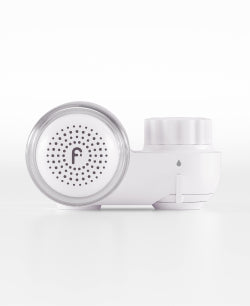
A shower filter reduces the chlorine and chloramineChlorine combined with a little ammonia. It lasts longer in the pipes and is harder to filter than plain chlorine. in your shower water, which is the travel variable you can actually bring home. Filterbaby is designed to reduce up to 99% of chlorine, chloramine, and microplastics. It will not change your sun exposure or your sleep, and it is not a treatment for any skin condition, but it takes the water question off the table so you can judge the rest of your routine on a level playing field.
Vacation changes a lot of things at once, and the water is the one you can keep. If your skin behaves away from home, the disinfectant in your daily shower is worth ruling in or out.
What Filterbaby reduces from your shower water
Before it reaches your skin and hair
(up to)
reduction (up to)
filtered (up to)
Certified
IAPMO Certified to NSF/ANSI 177 standards. Tested reduction performance in lab-certified conditions; plus or minus 6% efficacy fluctuation. When used and replaced as directed. A shower filter does not soften water.
Which Filterbaby is right for you
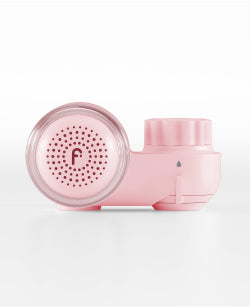
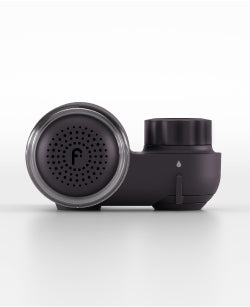
3 configurations, same filtration standard.


Frequently asked questions
Why does my skin look better on vacation?
I moved cities and my skin broke out. Could it be the water?
How do I check what is in my city's water?
Can a shower filter make home water feel more like vacation?
Which Filterbaby is best for this?
References
U.S. EPA, drinking water disinfection and Consumer Confidence (annual water quality) Reports. Disinfectant type and residual levels vary by public water system.
Published research on chlorinated water and skin-barrier function, including effects on the stratum corneum's water-holding capacity.
Filterbaby Pro Series and Diamond Series shower filters are IAPMO Certified to NSF/ANSI 177 standards and designed to reduce up to 99% of chlorine, chloramine, and microplastics; plus or minus 6% efficacy fluctuation from lab-certified testing, when used and replaced as directed. A shower filter does not soften water. This page is an educational reference; it is not medical advice. Consult a dermatologist for any persistent skin concern.