Does a shower filter help your hair? What the science actually says.
Search this and you get two confident answers: a miracle, or a gimmick. The research supports neither. Here is what has actually been measured about water and hair, and what has not.
 Written by Filterbaby EditorialWater & Skin Research Team
Reviewed by Filterbaby Dermatology Advisory BoardBoard-certified dermatologists
Written by Filterbaby EditorialWater & Skin Research Team
Reviewed by Filterbaby Dermatology Advisory BoardBoard-certified dermatologists
Search this question and you will get two confident answers. One says a filter transforms your hair. The other says shower filters are a gimmick. The published research supports neither, and the honest version is more useful than either.
The honest answer first
There is no peer-reviewed study of a domestic shower filter and hair. Not a positive one, not a negative one. We looked for it specifically, across the dermatology and cosmetic science literature, and the search returns nothing on hair or skin outcomes.
That matters in both directions. Anyone telling you a filter is clinically proven to change your hair is describing a study that does not exist. Anyone telling you filters are proven useless is describing the same missing study. What we can do is separate what has been measured about water and hair from what has not, and let you judge from there.
What chlorine does to a hair fibre
The study everyone cites looked at 67 members of the Japan National Swimming Team against 54 age-matched controls. Hair discolouration appeared in 61% of the swimmers and none of the controls. Under electron microscopy, the discoloured hair showed complete disappearance of the cuticleThe overlapping outer scales of a hair. It is the fibre’s only protective layer., and elemental chlorine was detectable inside the melanosomesThe pigment packages inside the hair cortex that give hair its natural colour. of every golden hair sampled.
Now the part that usually gets left out. The authors' own conclusion was that the discolouration was mainly due to cuticle damage by friction with water, and that chlorine could then penetrate to the cortex through the damaged cuticle. Chlorine is the second step in their mechanism, not the first.
Three further limits are worth stating plainly. The study measured natural pigment, not dyed hair. It measured elite swimmers training for hours a day in a pool, not people showering. And it never counted hairs, so it says nothing about shedding or loss.
The thing chlorine is usually blamed for
Green tint after swimming, and brassiness in lightened hair, are almost universally blamed on chlorine. The published case reports are unanimous that the cause is copper, picked up from pool algaecides or from household plumbing. In one 2014 case in a US paediatric dermatology journal, the green was initially attributed to the local pool, and the authors state directly that this was not the real cause. It was copper from the home's pipes.
Chlorine plays a supporting role at most: once the cuticle is compromised, metals deposit more readily. But the colour itself is a metal, and that distinction matters when you are deciding what a filter can do for you. NSF/ANSI 177, the shower filter standard, certifies free available chlorine reduction. It is not a metals standard.
Breakage or shedding
Before blaming water for anything, work out which problem you have, because they have different causes and different answers.
- Look for the bulb. A hair that shed from the root has a small pale bulb at one end. Breakage produces short segments with no bulb.
- Look at the part. A halo of short flyaway hairs along the part line is breakage, not new growth.
- Count roughly. Shedding up to about 100 hairs a day is generally considered normal. A sustained jump well beyond that, starting two to three months after an illness, surgery or major stress, points to telogen effluviumA temporary episode of excessive shedding, usually triggered two to three months earlier by illness, surgery, childbirth or severe stress. and is a question for a doctor.
Water chemistry is a fibre and texture question. It is not an explanation for loss at the follicle.
Your scalp is the growth environment
This is the most useful finding in recent US research, and the one most often skipped. A 2018 study found that scalp condition affects the integrity of a hair's cuticle before the hair emerges from the scalp. The fibre's starting quality is partly set by the skin it grows out of.
Cleveland Clinic trials published in 2021 went further, linking lower trans-epidermal water lossHow fast water escapes from skin into the air. A common laboratory measure of how well the skin barrier is holding moisture in. from the scalp with reduced shedding and higher hair counts.
That reframes the question. Your scalp is skin, and the case for reducing a daily oxidant in your shower water is the same case as for the skin on your face. It is a barrier argument, not a hair growth claim.
Damaged hair has less to lose
If your hair is bleached or heavily lightened, the starting point is different. In one US study, a single minute of bleaching increased the hair's measured surface area by 2.83 times and reduced wet breaking force by roughly 20%. A 2025 study found bleaching more than doubled water-driven swelling and cut wet elastic modulus by 38%.
Processed hair takes on more water, swells more, and is mechanically weaker when wet. Whatever is in that water reaches the cortex more easily than it would in virgin hair. This is the group with the most to gain from controlling daily inputs, and also the group least well served by a filter alone.
What to look for in a filter
The shower filter category is largely unregulated, so the questions below separate a tested product from a decorative one.
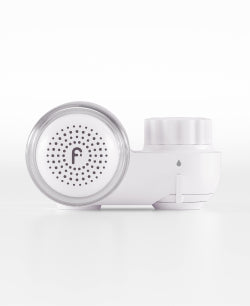
- Third-party certification, named. NSF/ANSI 177 is the shower filtration standard. Ask which body tested it. Filterbaby is IAPMO tested to exceed NSF/ANSI 177.
- What the certification actually covers. NSF/ANSI 177 covers free available chlorineThe active chlorine in tap water, as distinct from chloramine, which is chlorine bound with ammonia and is more stable. reduction as an aesthetic effect. Claims beyond that come from separate testing and should be stated separately.
- Chloramine, named specifically. More than one in five Americans is on a chloramine system. Chloramine is more stable than chlorine and harder to reduce, so a filter that only mentions chlorine may not be describing your water.
- A refill cadence you will actually keep. Filterbaby shower refills run 60 to 90 days depending on the series. A spent cartridge is not a filter.
- Honest limits. A filter that claims to fix everything is worth less than one that tells you what it does not do.
It will not regrow hair, reverse pattern hair loss, or undo bleach damage. It will not soften hard water, because hardness is dissolved calcium and magnesium and removing it takes ion exchange. And no study has yet tested one against a hair outcome. What it does is reduce a daily oxidant before the water reaches your scalp.
What Filterbaby reduces from your shower water
Before it reaches your skin and hair
(up to)
reduction (up to)
filtered (up to)
Certified
IAPMO Certified to NSF/ANSI 177 standards. Tested reduction performance in lab-certified conditions; plus or minus 6% efficacy fluctuation. When used and replaced as directed. A shower filter does not soften water.
Which Filterbaby is right for you
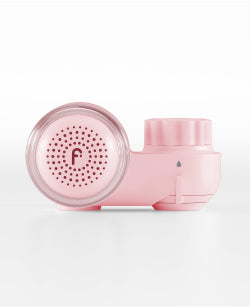
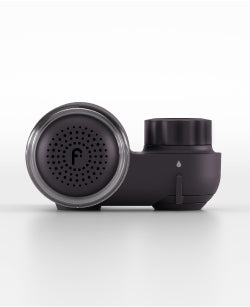
3 configurations, same filtration standard.


Frequently asked questions
Does a shower filter stop hair loss?
Does chlorine cause hair loss?
Why does my hair go green or brassy?
How do I tell breakage from shedding?
Will a filter help my colour-treated hair?
Does Filterbaby soften hard water?
How often do I replace the filter?
Which Filterbaby is best for hair?
References
Nanko H et al. Hair-discoloration of Japanese elite swimmers. The Journal of Dermatology, 2000. 67 national team swimmers against 54 age-matched controls; 61% versus 0% discolouration; electron microscopy showing cuticle loss and elemental chlorine within melanosomes. The authors attribute the discolouration mainly to cuticle damage by friction with water.
Published case reports of green hair, including a 2014 case in Pediatric Dermatology in which a swimming pool was initially blamed and copper from household plumbing was identified as the actual cause, and a 2024 case report in Skin Appendage Disorders describing accumulation of exogenous copper.
US research on scalp condition and hair cuticle integrity prior to emergence from the scalp (2018), and Cleveland Clinic trials (2021) associating lower scalp trans-epidermal water loss with reduced shedding and higher hair counts.
Hessefort YZ, Holland BT, Cloud RW. True porosity measurement of hair. Journal of Cosmetic Science, 2008. A single minute of bleaching increased measured surface area 2.83-fold and reduced wet breaking force by approximately 20%.
Gasparin RM, Lourenço CB, Leonardi GR. Porosity and Resistance of Textured Hair. Cosmetics, 2025. Bleaching more than doubled water-driven diameter variation and reduced wet elastic modulus by 38%.
NSF/ANSI 177, Shower Filtration Systems, Aesthetic Effects, covers verified reduction of aesthetic free available chlorine. Filterbaby shower filters are IAPMO tested to exceed NSF/ANSI 177. Plus or minus 6% efficacy fluctuation from lab-certified testing, when used and replaced as directed. A shower filter does not soften water. This page is an educational reference and is not medical advice.