How to start a skincare routine for dry skin — and the variable most routines skip.
Four steps. One overlooked variable. Here's the dry-skin routine — and why your tap water might be the reason it isn't working yet.
 Written by Filterbaby EditorialWater & Skin Research Team
Reviewed by Filterbaby Dermatology Advisory BoardBoard-certified dermatologists
Written by Filterbaby EditorialWater & Skin Research Team
Reviewed by Filterbaby Dermatology Advisory BoardBoard-certified dermatologists
A good dry-skin routine is short: four steps, in order, done consistently. The reason most routines stall isn't the products — it's an invisible variable underneath all four. Here's the routine, and the one thing most guides leave out.


What actually causes dry skin
Six causes, usually overlapping. The first five are visible; the sixth is invisible, which is why most routines stall.
Harsh cleansers, surfactants, hot water, or contaminants compromise the outer skin layer that holds moisture in.
Some skin types produce less sebum at baseline. Drier skin is often inherited, not seasonal.
Sebum stays high through your 20s, then declines after the third decade — significantly for women after menopause (Pochi et al.).
Cold, dry air pulls moisture from skin. Forced-air heating in winter is a major dry-skin trigger.
Layering too many actives (acids, retinoids, exfoliants) damages the barrier faster than products can heal it.
Chlorine and chloramine strip natural lipids every time you wash your face — the invisible variable underneath every routine.
The 4 essential steps
In order. Each step assumes the one before it is in place.
- 01 Cleanse — gently. Non-foaming cleanser with emollients. Cream and oil cleansers outperform gel and foam on dry skin. The water you rinse with matters as much as the bottle.
- 02 Tone — to hydrate, not strip. Hydrating toner with humectants (glycerin, hyaluronic acid, panthenol). If your toner makes skin feel tight, it's the wrong toner.
- 03 Moisturize — cream, within 3 minutes. Look for all three layers in one moisturizer: Humectants — Glycerin, hyaluronic acid, urea — pull water in. Emollients — Squalane, jojoba, ceramides — repair the barrier. Occlusives — Shea butter, dimethicone — seal moisture in. Apply within 3 minutes of cleansing — the AAD's "3-minute rule." After 3 minutes, surface water evaporates rapidly.
- 04 SPF — every morning, no exceptions. Broad-spectrum SPF 30 minimum. Mineral filters (zinc oxide, titanium dioxide) are usually less irritating for dry skin than chemical ones.
Glycerin, hyaluronic acid, urea — pull water in.
Squalane, jojoba, ceramides — repair the barrier.
Shea butter, dimethicone — seal moisture in.
Your tap water is part of every step
Most U.S. municipal water carries chlorine or chloramine — added to kill bacteria in pipes, but they don't stop working when they reach your skin. For dry-skin types specifically, the chemistry of the water you rinse with shapes whether the rest of the routine compounds or stalls.
The same lipid layer your moisturizer is rebuilding is the layer chlorine strips every wash. With 700+ face washes a year, that adds up.
Face washes per year in unfiltered tap water
Chlorine & chloramine Filterbaby reduces
Strips the skin's natural lipid layer — the same layer your moisturizer is rebuilding (Seki et al., 2003).
Chlorine + ammonia. Harder to filter than free chlorine. Compounds the same barrier-stripping effect.
Detected in 83–94% of U.S. tap water samples. Linked to inflammatory skin responses in emerging research.
The fix: a filter for your face-wash water
The most direct way to remove the water variable is a faucet filter that reduces chlorine and chloramine before water reaches your face.
Installs on your bathroom faucet in under 5 minutes. Reduces up to 99% of chlorine and chloramine before water reaches your face.
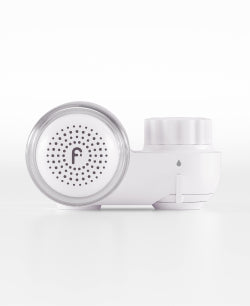
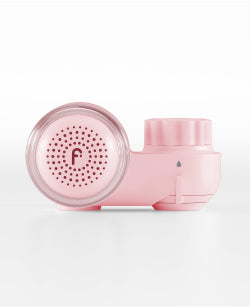
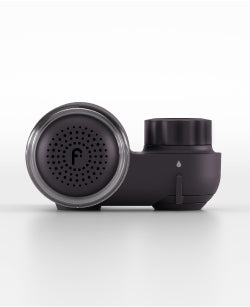
Filterbaby Skincare Faucet Filter
Chlorine reduction
Install, no plumber
Refill cadence
Derm-recommended
IAPMO Certified to NSF/ANSI 177
Filterbaby Essential Faucet Filter — $49.99 (was $69.99). Same chlorine and chloramine reduction standard, more accessible price point. Best for second bathrooms, kids' rooms, or first-time filter buyers. Shop Essential →
Hot vs. lukewarm — the temperature mistake
The AAD recommends 5–10 minute showers in warm (not hot) water. The same logic applies to face washing.
- Lukewarm water (neutral against your wrist)
- Showers 5–10 minutes max
- Cool final rinse on the face
- Pat dry — don't rub
- Hot water on your face — strips the barrier
- 20-minute shower routines
- Hot final rinse (causes redness)
- Rub-dry with a rough towel
Lukewarm water (neutral against your wrist) / Showers 5–10 minutes max / Cool final rinse on the face / Pat dry — don't rub
Hot water on your face — strips the barrier / 20-minute shower routines / Hot final rinse (causes redness) / Rub-dry with a rough towel
How long until you see results
Skin renewal cycles depend on age. Be patient through at least one full cycle.
Consistency beats intensity. A simple routine you do every day for 8 weeks beats an elaborate one you do twice a week. Most "this didn't work" verdicts come before the second renewal cycle finishes.
Surface improvements (less tightness, less flaking) within 1–2 weeks. Structural changes around weeks 4–6.
Surface improvements similar timing. Structural changes take 8–10 weeks. Patience matters more here.
Skin renewal slows substantially. Visible results compound over months, not weeks.
When to add actives
Active ingredients are powerful and double-edged for dry skin. Layer them in this order, not all at once.
Establish the 4 steps. Address the water variable. No actives yet.
Sodium or magnesium ascorbyl phosphate in the morning — gentler than pure L-ascorbic acid.
Lowest concentration, 2–3 nights per week. Only after the barrier is healthy enough to tolerate it.
The routine, minute by minute
Morning and evening, mapped to the steps.
- Splash filtered lukewarm water on face
- Gentle cream cleanser (30 seconds, rinse)
- Hydrating toner (pat in)
- Moisturizer — within 3 minutes, while damp
- Broad-spectrum SPF 30+
- Filtered lukewarm rinse to clear sweat and SPF
- Oil or cream cleanser (lifts sunscreen and makeup)
- Optional: hydrating toner
- Optional active (only after months 2–3)
- Heavier night moisturizer or facial oil
5 minutes
5–7 minutes
What Filterbaby reduces from your shower water
Before it reaches your skin and hair
(up to)
reduction (up to)
filtered (up to)
Certified
IAPMO Certified to NSF/ANSI 177 standards. Tested reduction performance in lab-certified conditions; plus or minus 6% efficacy fluctuation. When used and replaced as directed. A shower filter does not soften water.
Which Filterbaby is right for you
3 configurations, same filtration standard.


Frequently asked questions
What's the most important step in a dry-skin routine?
Can I just wash my face with water instead of a cleanser?
How long until I see results from a new dry-skin routine?
Does tap water really make dry skin worse?
Should I change my routine in winter vs. summer?
How often should I replace my Filterbaby faucet filter?
Is a faucet filter worth it for sensitive skin?
References
Seki, T. et al. (2003). "Free residual chlorine in bathing water reduces the water-holding capacity of the stratum corneum in atopic skin." Journal of Dermatological Science.
Filterbaby Skincare Faucet Filter is IAPMO Certified to NSF/ANSI 177 for chlorine reduction. ±6% efficacy fluctuation from lab-certified testing. When used and replaced as directed. Individual experiences may vary. This page is provided as an educational reference; it is not medical advice.