63%
Increase in skin hydration*

Filterbaby — Science & Evidence
A look at the clinical trial, the in vitro research, and the independent lab data behind Filterbaby’s Faucet Filter—and what each one actually measured.
The Problem
Most people filter water for drinking. Almost no one filters it for skin—even though your face washes in it every day. Tap water is treated with chemical disinfectants, picks up heavy metals and minerals from aging infrastructure, and carries physical particulates small enough to pass through standard filters undetected.
None of this is visible. None of it is labeled. And for people with acne-prone, sensitive, or reactive skin, the cumulative exposure adds up with every rinse.
Chlorine and chloramine are oxidizing agents added to municipal water supplies to kill bacteria. They are effective at that job. They are also effective at stripping the skin’s lipid barrier—the layer of fats between skin cells that keeps moisture in and irritants out. Chronic exposure degrades this barrier over time, leaving skin drier, more reactive, and more susceptible to inflammation.
Hard minerals—calcium, magnesium, iron, copper, zinc—are present at varying concentrations in tap water across the country. Hard water disrupts the skin’s natural lipid balance. Studies have linked hard water use to higher rates of eczema and skin dryness, particularly in cities with older water infrastructure.
Physical particulates—rust, bacteria, algae, fungi, and microplastics—travel through aging pipes and arrive at the tap at particle sizes invisible to the eye. Standard carbon filters do not capture particles below 5–10 microns. Filterbaby’s ultrafiltration membrane captures particles down to 0.2 microns.
The Mechanism
The face is not the same as skin elsewhere on the body. The stratum corneum—the outermost layer of skin—is thinner on the face, more densely populated with sebaceous glands, and more reactive to environmental stressors. What feels tolerable on body skin may register as an irritant on facial skin.
For people with compromised barriers—those with acne, eczema, rosacea, or sensitivity—the problem compounds. Every wash with unfiltered water is another round of exposure to chlorine, oxidizing agents, and mineral deposits at the one place on the body least equipped to handle it.
This is the premise Filterbaby was built on: that for a meaningful group of people, the water itself is a contributing factor to chronic skin issues—and filtering it for the skin, not just for drinking, was worth studying rigorously.
Study 01 — Clinical
The first question Filterbaby set out to answer was straightforward: does filtered water produce a measurable improvement in skin hydration, as verified by an independent lab using instrument-based measurement—not self-report?
The study enrolled 35 participants—21 female, 14 male, aged 16 to 65—with normal and sensitive skin. Participants were asked to discontinue any hydrating or anti-aging topical products during the study period and follow their regular personal hygiene routine, replacing tap water with Filterbaby-filtered water for all facial washing. The evaluation period was two weeks.
Measurement instrument. Skin hydration was measured using a Callegari Soft Plus device with a capacitive hydration probe and micro camera. The probe calculates the dielectric constant of the stratum corneum to determine moisture content—a direct measurement of hydration state, not a subjective score. Testing was conducted in controlled conditions at 20±3°C and 50±10% relative humidity. All measures were taken at baseline (t0) and at two weeks (t2), with five independent measurements averaged per reading.
The study was conducted by an independent certified third-party lab. Filterbaby did not conduct or interpret the results internally.
* Results from a clinical study with 35 participants via 3rd party lab for Filterbaby Faucet Filter. Individual experiences and results may vary.
Study 02 — In Vitro
A clinical trial measures how participants respond. An in vitro study measures what happens at the cellular level—outside of any individual’s lifestyle, genetics, or skincare routine. Filterbaby commissioned a certified third-party in vitro study to answer a more fundamental question: does Filterbaby-filtered water create a better biological environment for skin cells?
The study focused on keratinocytes—the primary cell type of the epidermis, responsible for forming the skin’s protective outer layer. Keratinocytes were exposed to Filterbaby-filtered water and measured against controls across five metrics: cell growth, wound healing, moisture, skin lipids, and lipid barrier integrity.
These are direct lab measurements. The wound healing figure does not mean 69.1% of users reported improved healing. It means that in a controlled lab environment, isolated skin cells exposed to Filterbaby water healed wounds 69.1% faster than the control group.
All figures are direct lab measurements on isolated cells—not self-reported survey responses.
** 3rd-party certified in-vitro study of Filterbaby Skincare Faucet Filter.
Lab Certification
Skin studies measure biological outcomes. Contaminant testing measures what the filter actually removes—under standardized conditions, verified by a third party. Filterbaby has been certified by IAPMO, the International Association of Plumbing and Mechanical Officials, one of the leading independent certification bodies in water filtration.
IAPMO certification means the product was tested against published NSF/ANSI standards by an accredited lab external to Filterbaby. The results below are certified figures, not marketing estimates. All contaminant removal percentages are “up to” values that reflect peak lab-tested performance; real-world efficacy varies by ±6% depending on water source, flow rate, and filter life.
Against the Field
Most faucet filters were designed around drinking water standards—targeting taste, odor, and broad chemical reduction. Filterbaby was built for a different use case: facial skin. That distinction shows up in where the product has been tested, what its filtration layers are optimized for, and what independent bodies have certified it.
| Capability | Filterbaby | Other Filter Brands | Budget Filter |
|---|---|---|---|
| 3rd-party clinical skin study | ✓ | — | — |
| Certified in vitro skin cell study | ✓ | — | — |
| IAPMO contaminant certification | ✓ | — | — |
| #1 dermatologist recommended brand* | ✓ | — | — |
| Hollow fiber ultrafiltration (0.2 µm) | ✓ | — | — |
| Dedicated mineral-reduction layer | ✓ | — | — |
| Carbon fiber chemical filtration | ✓ | ✓ | — |
The Findings
Each finding below is sourced directly from one of the three independent studies. Every figure is linked to its source.
The clinical study found a statistically meaningful improvement in stratum corneum hydration after two weeks of daily use, measured by a capacitive probe. The in vitro study supported this finding at the cellular level, showing independent increases in moisture and skin lipid content.
Chlorine and oxidizing agents are well-documented skin irritants. Removing up to 99% of these at the source reduces the cumulative chemical load on skin with every wash. The consumer data reflects this across a 155-person cohort.
The in vitro study measured Filterbaby water’s direct effect on keratinocyte behavior. Keratinocytes form the epidermis and are responsible for producing the skin barrier. Improvements in cell growth, wound healing rate, and lipid barrier integrity suggest that filtered water creates a meaningfully better cellular environment for skin function.
Skin radiance was assessed in the clinical study alongside hydration. Improvement at two weeks was measured at 61%—an instrument-based finding from the same independent 3rd-party lab that conducted the hydration assessment.
The clinical study evaluated outcomes at two weeks. This is the window during which the capacitive hydration probe detected measurable improvement in stratum corneum moisture content. For the clinical claim “clinically tested to improve skin in just 2 weeks,” this is the underlying data.
“The first water filter clinically tested for skin, with in vitro evidence and independent lab certification to match.”America’s #1 water filter brand trusted by leading dermatologists — Ranked in a blind 3rd-party consumer study
How It Works
Filterbaby uses three independent filtration technologies stacked in sequence. Each targets a different class of contaminant. Together, they address chemical disinfectants, hard minerals, and physical particulates in a single pass.
Consumer Data
Clinical and in vitro studies measure biological outcomes under controlled conditions. Consumer surveys measure what people notice about their skin in real life. These are two different categories of evidence, and Filterbaby has both. The figures below are from a consumer study of 155 Filterbaby users.
†† Results based on a consumer study of 155 Filterbaby users. ††† Results from a consumer study of 50 Filterbaby Faucet Filter users.
Filterbaby Faucet Filter — America’s #1 water filter brand trusted by leading dermatologists.*
Shop the Faucet Filter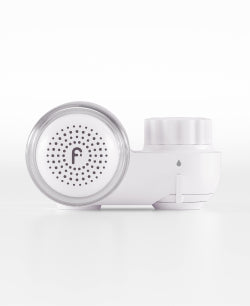
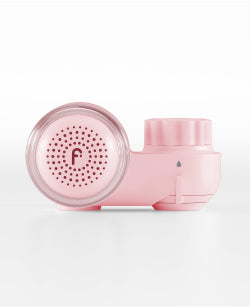
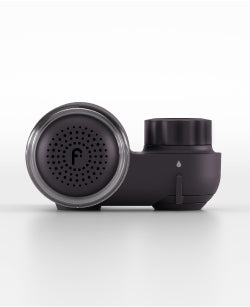
Filterbaby Faucet Filter Pro
White