Why is my skin always dry? The tap water answer.
Chlorine and chloramine in unfiltered tap water oxidize the lipids in your skin barrier with every wash. The dryness many people blame on weather, age, or their moisturizer often starts upstream — at the faucet.
 Written by Filterbaby EditorialWater & Skin Research Team
Reviewed by Filterbaby Dermatology Advisory BoardBoard-certified dermatologists
Written by Filterbaby EditorialWater & Skin Research Team
Reviewed by Filterbaby Dermatology Advisory BoardBoard-certified dermatologists
The dryness many people blame on weather, age, or their moisturizer often starts at the faucet. Tap water can cause or worsen chronic dryness through three distinct pathways, each with its own research base.
How tap water dries your skin
The skin barrier (stratum corneum) is built from layers of corneocytes held together by a lipid matrix of ceramides, cholesterol, and free fatty acids. This barrier has two jobs: keep moisture in, and keep irritants out. Damage to the barrier means both jobs fail at once.
Chlorine and chloramine: the oxidation problem
Chlorine and chloramine are oxidizing disinfectants — they kill pathogens by breaking down organic molecules. The same chemistry that disinfects water also reacts with the lipids in your skin barrier. Daily exposure progressively degrades the ceramide and fatty-acid components of the lipid matrix, weakening the seal that retains moisture.
The result is measurable. A barrier that's been chronically oxidized loses water faster (increased transepidermal water loss), feels tight after washing, and responds less to topical moisturizers because the structure they support is compromised.
The pH shift
Healthy skin sits at pH 4.5–5.5 — the "acid mantle" that supports beneficial microbes, activates barrier-repair enzymes, and helps retain moisture. Treated tap water is often more alkaline. Daily washing with alkaline water progressively shifts surface pH upward, impairing the acid mantle's ability to do its work.
Microplastics: the emerging factor
Microplastic particles have been detected in 83–94% of U.S. tap water samples. On skin, the smaller size ranges have been associated with localized oxidative stress — the same inflammation marker driving barrier dysfunction in chronic dry skin. The research is early but the direction is consistent with what dermatologists are seeing clinically.
7 signs your dry skin is tap-water related
If three or more apply, your water chemistry is a plausible contributor.
- 01 Skin feels tight immediately after washing — Post-wash tightness is a hallmark of lipid-barrier disruption. Skin should feel soft and slightly supple after cleansing — not stretched or stripped.
- 02 Dryness that worsens through the day — A healthy barrier retains moisture across a normal day. If skin feels increasingly dry, taut, or rough between morning and evening despite a moisturizer, your barrier is leaking water faster than it should.
- 03 Topical products stopped working — Oxidative contaminants can degrade actives like retinoids, vitamin C, and niacinamide on contact. If your routine quietly stopped delivering without any other change, the water is worth examining.
- 04 Skin improves when you travel — If your skin consistently improves in different cities and worsens when you return home, that's one of the clearest signals that your local water is a factor.
- 05 Post-shower itch — Generalized itch in the 10–30 minutes after a shower is associated with chlorine-driven barrier disruption. A compromised barrier exposes nerve endings to mild irritants more readily.
- 06 Reactive, flushing skin — A barrier under chronic oxidative stress reacts more easily to mild triggers — weather, scented products, exercise. Reactivity is a barrier-integrity problem before it's a sensitivity problem.
- 07 Flakiness around the nose, jawline, or hairline — These are the highest water-contact zones during washing. Flakiness concentrated there — rather than evenly distributed — points to the wash water as a contributing factor.
What dermatologists say
Board-certified dermatologists consistently identify tap water contaminants — specifically chlorine and chloramine — as aggravating factors in dry skin, eczema, rosacea, and barrier dysfunction. Filterbaby's dermatology advisory board includes four board-certified dermatologists: Dr. Anthony Youn, Dr. Lindsey Zubritsky, Dr. Mamina Turegano, and Dr. Jenny Liu. Each has reviewed Filterbaby's clinical filtration data and supports the scientific basis for filtered water as part of a skin-health regimen.
The clinical consensus has shifted. Water chemistry is not a cosmetic detail — it is an upstream contributor to barrier dysfunction, dryness, and reactivity.
Topical moisturizers add lipids on top of the existing barrier. If the underlying barrier is being oxidized daily by the wash water, you're refilling a bucket with a hole in it. Filtering at the source addresses the upstream driver.
What changes when you filter your water
Clinical study data — Filterbaby
Three in-vitro studies (Feb 2025) and one clinical human study (CE Way, 2020). Skin outcomes measured against standard U.S. tap water.
Sources: CE Way clinical study (2020, 35 participants); third-party in-vitro performance evaluation, Feb 2025; consumer survey studies, Feb 2026 (results may vary). See the full clinical study →
Improvement in skin lipid barrier function vs. tap water — Feb 2025 in-vitro, ATR-FTIR.
Skin moisture increase vs. tap water — Feb 2025 in-vitro, Corneometer.
Objectively measured skin hydration increase — 35-participant clinical study, CE Way 2020.
Reported reduction in skin dryness after 30 days — consumer survey, n=160. Results may vary.
Reported reduction in redness after 30 days — consumer survey, n=147. Results may vary.
Wound-healing improvement vs. tap water — Feb 2025 in-vitro scratch assay.
How to fix it: 3 options, ranked by cost
The most targeted intervention is filtering the water that contacts your face and body directly. You don't need a whole-house system.
Run a 14-day test: wash your face exclusively with filtered-pitcher or inexpensive bottled water. If your skin feels meaningfully different — less tight, less reactive — your tap water is a confirmed factor. This is the diagnostic step.
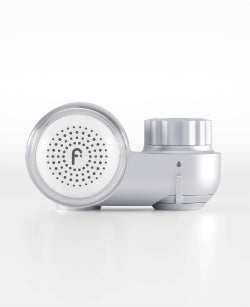
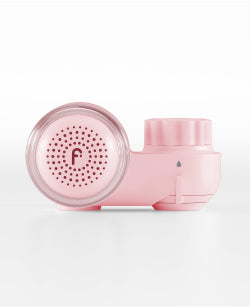
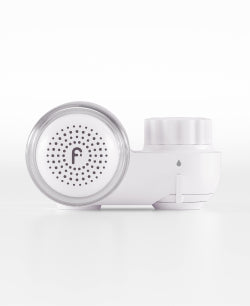
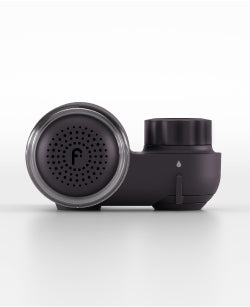
Designed specifically for face washing. Reduces up to 99% of chlorine and chloramine — the contaminants implicated in lipid-barrier oxidation. IAPMO Certified to NSF/ANSI 177. A faucet filter reduces more per liter than a shower filter because it runs at a lower flow rate, giving the media more contact time. In a 30-day survey (n=160), 68% reported reduced dryness. Results may vary.
For dryness across the body — not just the face — shower water matters as much as faucet water. The Pro Series Shower Filter ($139 MSRP / $99 subscription) reaches the full-body exposure surface. Same filtration technology, higher flow rate, certified by the American Hair Loss Association. Pairing both gives complete coverage. See our full shower filter comparison →
What Filterbaby reduces from your shower water
Before it reaches your skin and hair
(up to)
reduction (up to)
filtered (up to)
Certified
IAPMO Certified to NSF/ANSI 177 standards. Tested reduction performance in lab-certified conditions; plus or minus 6% efficacy fluctuation. When used and replaced as directed. A shower filter does not soften water.
Which Filterbaby is right for you
3 configurations, same filtration standard.


Frequently asked questions
Can tap water cause dry skin?
Why does my skin feel tight after washing?
How do I know if tap water is causing my dry skin?
What is the best shower filter for dry skin?
How long does it take for skin to improve after switching to filtered water?
Are microplastics in tap water bad for skin?
Will a moisturizer fix dry skin from tap water?
References
Sources: CE Way clinical study (2020, 35 participants). Third-party in-vitro performance evaluation, Feb 2025. Consumer survey studies, Feb 2026 — results may vary.
Filterbaby Skincare Faucet Filter is IAPMO Certified to NSF/ANSI 177 for chlorine reduction. ±6% efficacy fluctuation from lab-certified testing. When used and replaced as directed. The shower filter is certified by the American Hair Loss Association. Individual experiences may vary. This page is provided as an educational reference; it is not medical advice.