Can tap water cause acne? The science, explained.
Yes — and the mechanism is specific. Chlorine, chloramine, and microplastics each disrupt your skin through different pathways. Here's what the research shows, and what dermatologists recommend.
 Written by Filterbaby EditorialWater & Skin Research Team
Reviewed by Filterbaby Dermatology Advisory BoardBoard-certified dermatologists
Written by Filterbaby EditorialWater & Skin Research Team
Reviewed by Filterbaby Dermatology Advisory BoardBoard-certified dermatologists
The short answer is yes — but it's worth understanding how, because the mechanism tells you exactly what to fix. Tap water can cause or worsen acne through three distinct pathways, each with its own research base.


What's actually in your tap water
The EPA sets a legal limit for chlorine in drinking water at 4.0 mg/L — the same limit applied to swimming pools. Most municipal water is treated with chlorine or chloramine before it reaches your tap. According to the Environmental Working Group, over 200 chemicals have been detected in U.S. tap water samples, many with no federal regulatory limits.
Chlorine and chloramine
Chlorine is added as a disinfectant and is effective at eliminating pathogens. Chloramine (chlorine + ammonia) is increasingly used instead because it persists longer in the distribution system. Both are oxidizing agents — they chemically react with and break down organic molecules, including the ceramides and fatty acids that form your skin's protective barrier.
Microplastics
Microplastics — plastic particles smaller than 5 millimeters — have been detected in over 80% of tap water samples in studies by Orb Media and follow-up academic research. On the skin, they're associated with localized inflammation and barrier oxidative stress in emerging dermatological literature.
Disinfection byproducts
Trihalomethanes (THMs) are byproducts of chlorine disinfection. They've been linked to increased skin permeability and inflammation, and are an under-discussed contributor to skin reactivity from tap water exposure.
How chlorine disrupts the skin microbiome
Your skin hosts trillions of microorganisms that regulate immune responses, maintain pH, and suppress pathogenic bacteria. Cutibacterium acnes is naturally present on all skin — it only becomes problematic when the ecosystem around it is disrupted, when beneficial bacteria like Staphylococcus epidermidis (which competes with C. acnes and suppresses its growth) are reduced.
Chlorine is a broad-spectrum antimicrobial. When you wash your face with chlorinated water, it doesn't discriminate between the bacteria you want gone and the bacteria that protect you. Research on chlorine's effects on cutaneous microbiome diversity consistently shows that regular exposure reduces microbial diversity — the exact condition that allows C. acnes overgrowth.
Chlorine also oxidizes the ceramides and fatty acids that form the stratum corneum lipid barrier. A disrupted barrier means increased transepidermal water loss, impaired ability to keep irritants out, and a more hospitable environment for bacterial penetration into follicles.
The two contaminants people overlook
Chloramine: the persistence problem
Chloramine is favored by utilities because it persists in pipes far longer than chlorine. That same persistence is the problem for skin: chloramine is harder to off-gas, doesn't dissipate when water sits, and standard activated-carbon filtration alone is less effective against it. A filter that meaningfully reduces chloramine requires a media specifically designed for it — not a generic carbon filter.
Microplastics: the emerging contaminant
Microplastics are the contaminant the regulatory framework hasn't caught up to. They've been detected in 83–94% of U.S. tap water samples. On the skin, particles in the smaller size ranges have been associated with localized oxidative stress — an inflammation marker shared with acne pathogenesis. The research is early, but the direction is consistent.
5 signs your water is causing breakouts
If three or more apply, your tap water is a plausible trigger.
- 1 Breakouts concentrated around the jaw, cheeks, and hairline — These are the areas with the most water contact during face washing and hair rinsing. If your breakout pattern maps to water-contact zones rather than typical hormonal areas, water is a plausible trigger.
- 2 Skin feels tight or "squeaky clean" right after washing — Skin should feel soft and slightly supple after washing — not tight or stripped. Tightness signals your lipid barrier has been compromised by chlorine or chloramine.
- 3 Breakouts improve when you travel — If your skin consistently improves away from home and worsens when you return, that's one of the clearest signals your local water chemistry is a contributing factor.
- 4 Skincare products stop working as well — Oxidative contaminants in tap water can degrade topical actives like retinoids, vitamin C, and niacinamide on contact. If your routine stopped working without any other change, your water is worth examining.
- 5 Persistent low-grade inflammation that resists treatment — Redness or breakouts that don't respond to routine changes often point to an upstream irritant. Daily exposure to oxidizing contaminants creates a baseline of inflammation no cleanser can outrun.
What dermatologists say
Board-certified dermatologists consistently identify tap water contaminants — specifically chlorine and chloramine — as aggravating factors in acne, eczema, rosacea, and barrier dysfunction. Filterbaby's dermatology advisory board includes four board-certified dermatologists: Dr. Anthony Youn, Dr. Lindsey Zubritsky, Dr. Mamina Turegano, and Dr. Jenny Liu. Each has reviewed Filterbaby's clinical filtration data and supports the scientific basis for filtered water as part of a skin-health regimen.
Water quality is not a cosmetic concern — it is a clinical one, and an upstream contributor to barrier dysfunction, reactivity, and acne. Consensus framing from Filterbaby's board-certified dermatology advisory board.
What changes when you filter your water
Three in-vitro studies (Feb 2025) and one clinical human study (CE Way, 2020), measured against standard U.S. tap water.
Sources: CE Way clinical study (2020, 35 participants); third-party in-vitro performance evaluation, Feb 2025; consumer survey studies, Feb 2026 (results may vary). See the full clinical study →
Reported reduced acne after 30 days — consumer survey, n=147. Results may vary.
Reported reduction in redness after 30 days — consumer survey, n=147. Results may vary.
Improvement in skin lipid barrier function vs. tap water — Feb 2025 in-vitro, ATR-FTIR.
Skin moisture increase vs. tap water — Feb 2025 in-vitro, Corneometer.
Objectively measured skin hydration increase — 35-participant clinical study, CE Way 2020.
Reported reduction in skin dryness after 30 days — consumer survey, n=160. Results may vary.
How to fix it: 3 options, ranked by cost
The most targeted intervention is filtering the water that contacts your face directly.
Before investing in anything, run a 30-day test: wash your face exclusively with filtered-pitcher or inexpensive bottled water. If your skin improves meaningfully, your tap water is your trigger. This confirms the diagnosis before you spend anything.
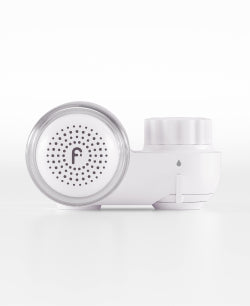
Designed specifically for face washing. Reduces up to 99% of chlorine and chloramine — the contaminants implicated in microbiome disruption and barrier oxidation. Attaches directly to your bathroom faucet. In a 30-day survey (n=147), 63% of users reported reduced acne. Results may vary.
For acne that includes the scalp, back, or chest, shower water matters as much as faucet water. The Pro Series Shower Filter addresses the full-body exposure surface — same filtration, higher flow rate, certified by the American Hair Loss Association. Pairing both gives complete coverage across all water-contact zones.
A real customer before/after pair showing skin clarity change.
Two square images, same lighting, no makeup in either, same distance. Needs signed consent, dated, and a visible timeframe label. FTC requires typicality disclosure if not typical.What Filterbaby reduces from your shower water
Before it reaches your skin and hair
(up to)
reduction (up to)
filtered (up to)
Certified
IAPMO Certified to NSF/ANSI 177 standards. Tested reduction performance in lab-certified conditions; plus or minus 6% efficacy fluctuation. When used and replaced as directed. A shower filter does not soften water.
Which Filterbaby is right for you
3 configurations, same filtration standard.


Frequently asked questions
Can tap water really cause acne?
Can chlorine in tap water cause breakouts?
Is filtered water better for acne-prone skin?
What type of water is best for washing acne-prone skin?
Are microplastics in tap water bad for skin?
How long until I notice a difference after switching to filtered water?
References
Sources: CE Way clinical study (2020, 35 participants). Third-party in-vitro performance evaluation, Feb 2025. Consumer survey studies, Feb 2026 — results may vary.
Filterbaby Skincare Faucet Filter is IAPMO Certified to NSF/ANSI 177 for chlorine reduction. ±6% efficacy fluctuation from lab-certified testing. When used and replaced as directed. The shower filter is certified by the American Hair Loss Association. Individual experiences may vary. This page is provided as an educational reference; it is not medical advice.