You've done everything right. So why are you still breaking out?
You optimized your diet, your cleanser, your actives — and the breakouts kept coming. Here's why the water you wash your face with, not what you wash it with, may be the variable you've been missing.
 Written by Filterbaby EditorialWater & Skin Research Team
Reviewed by Filterbaby Dermatology Advisory BoardBoard-certified dermatologists
Written by Filterbaby EditorialWater & Skin Research Team
Reviewed by Filterbaby Dermatology Advisory BoardBoard-certified dermatologists
If you've done the work on cleansing, diet, and actives and you're still breaking out, the variable most adults haven't addressed is the chlorine and chloramine in their tap water. These oxidizing disinfectants disrupt the skin's microbiome and lipid barrier on every wash — undermining the rest of your routine. Here's what the routine should actually look like, what blackheads really are, what diet does and doesn't do, and the water mechanism most skincare conversations skip.


Your cleansing routine is probably fine
For most adults who have been at this for six months or more, the cleanser isn't the bottleneck. The fundamentals are well-documented and not complicated.
What good cleansing looks like
- Gentle non-foaming or low-foaming cleanser with a slightly acidic pH (4.5–5.5).
- Twice daily — morning and night. More than that strips the lipid barrier.
- Lukewarm water, not hot. Hot water accelerates barrier disruption and increases skin permeability.
- Pat dry, don't rub. Apply moisturizer to slightly damp skin to trap hydration.
- No mechanical scrubs, no over-exfoliation. Once or twice a week is the upper limit for chemical exfoliation; scrubbing creates microtears.
Common over-corrections
The most frequent mistake in adult acne routines isn't under-cleansing — it's over-cleansing. Multiple cleanses per day, aggressive surfactants, and stacking actives (retinoid + acid + benzoyl peroxide every night) all damage the barrier they're trying to repair. When the barrier is compromised, C. acnes finds more hospitable terrain, not less. If your skin feels tight after washing, that's not "clean" — that's stripped.
Most adults with persistent breakouts have already corrected the cleansing variable; the improvement plateau usually arrives within 60–90 days. If you're well past that and still breaking out, the bottleneck is elsewhere.
Blackheads: what they actually are
Almost every blackhead misconception is rooted in one wrong assumption: that they're dirt. They aren't. A blackhead (open comedone) is a pore filled with sebum and dead skin cells. The "black" appearance isn't dirt — it's oxidation. When trapped sebum meets air at the open pore, the melanin and lipids in it darken.
Three implications follow:
Dermatology offices extract blackheads cleanly — and they come back, because the underlying drivers (sebum, turnover rate, pore environment) haven't changed. Chronic oxidative load from chlorine and chloramine is one of the most documented contributors.
- Scrubbing doesn't work. The contents sit deep in the pore; mechanical extraction (squeezing, pore strips) tears the pore wall and often makes it worse.
- Regulating turnover does. Topical retinoids (adapalene, tretinoin) normalize cell turnover; salicylic acid (BHA) is oil-soluble and can dissolve the cell-debris matrix inside the pore.
- The pore environment matters as much as the topical. A pore in a barrier-compromised, microbiome-disrupted environment is a harder place for those actives to work. This is where water chemistry enters.
Diet matters — but probably not how you think
What the research supports
- High-glycemic-load diets have been associated with acne severity in multiple controlled studies, via insulin and IGF-1 signaling.
- Dairy — especially skim milk — has been associated with acne in epidemiologic studies; the mechanism is likely hormonal.
- Omega-3 intake has anti-inflammatory effects relevant to inflammatory acne in some studies, though effect sizes are modest.
What's overstated
- Most "detoxes" and elimination diets aren't supported by acne-specific research.
- Chocolate as a cause — the original studies were flawed; the likelier culprit is glycemic load or dairy in milk chocolate.
- Hydration alone fixing acne — it supports skin function but doesn't outrun ongoing barrier disruption from external sources.
If you eat clean for your skin but still wash your face with chlorinated tap water, you're regulating one input (food) while leaving another (daily oxidative exposure) wide open. Diet sets the internal environment; water chemistry sets the external one.
The missing variable: your tap water
U.S. municipal water is treated with chlorine or chloramine for disinfection. Both are oxidizing agents — they don't stop working when they hit your face.
How chlorine drives breakouts
Chlorine is a broad-spectrum antimicrobial. It doesn't distinguish between the bacteria you want gone and the ones that protect you. Daily exposure reduces skin microbiome diversity, including beneficial species like Staphylococcus epidermidis that compete with C. acnes and suppress its growth. It also oxidizes the ceramides and fatty acids in the lipid barrier, so a barrier under chronic oxidative stress loses moisture faster and provides less stable terrain for your actives.
Chloramine: the longer-lasting one
Chloramine (chlorine + ammonia) is increasingly used because it persists longer in the distribution system. The same persistence is the problem for skin: it doesn't off-gas when water sits, and standard activated-carbon filtration is less effective against it. A filter that meaningfully reduces chloramine requires media designed for it.
Microplastics: the emerging factor
Microplastics have been detected in 83–94% of U.S. tap water samples. On the skin, smaller particles have been associated with localized oxidative stress — the same inflammation marker that drives barrier dysfunction and inflammatory acne.
Topical actives work on the surface; diet works from the inside. But the water hitting your face twice a day bypasses both. If your barrier is being oxidatively disrupted at the sink every morning and night, your retinoid is rebuilding what your water is breaking down. That's the loop.
What changes when you filter your water
Three in-vitro studies (Feb 2025) and one clinical human study (CE Way, 2020), measured against standard U.S. tap water.
Sources: CE Way clinical study (2020, 35 participants); third-party in-vitro evaluation, Feb 2025; consumer surveys, Feb 2026 (results may vary). See the full clinical study →
Reported reduced acne after 30 days — consumer survey, n=147. Results may vary.
Reported reduction in redness after 30 days — consumer survey, n=147. Results may vary.
Improvement in skin lipid barrier function vs. tap water — Feb 2025 in-vitro, ATR-FTIR.
Skin moisture increase vs. tap water — Feb 2025 in-vitro, Corneometer.
Objectively measured skin hydration increase — 35-participant clinical study, CE Way 2020.
Reported reduction in skin dryness after 30 days — consumer survey, n=160. Results may vary.
What to actually do
Keep the parts of your routine that work and add the upstream fix. If you've already optimized your cleanser, actives, and diet, you don't need to overhaul anything — you need to address the input you haven't: the water itself.
Run a 30-day test: wash your face exclusively with filtered-pitcher or inexpensive bottled water, keeping everything else the same. If your skin improves — less reactivity, fewer breakouts, less post-wash tightness — your tap water is confirmed as a factor. This is the diagnostic step.
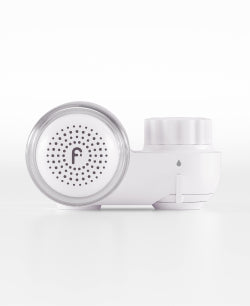
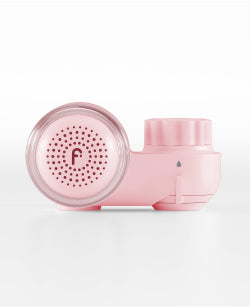
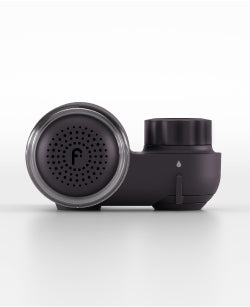
Designed specifically for face washing. Reduces up to 99% of chlorine and chloramine — the contaminants implicated in microbiome disruption and barrier oxidation. IAPMO Certified to NSF/ANSI 177. Attaches to your faucet in under 5 minutes. In a 30-day survey (n=147), 63% of users reported reduced acne. Results may vary.
For breakouts that include the chest, back, or hairline, shower water matters as much as faucet water. The Pro Series Shower Filter is the only shower filter certified by the American Hair Loss Association and IAPMO Certified to NSF/ANSI 177. Pairing both covers the full water-contact surface.
A real customer before/after pair for the breakout narrative.
Two square images, matched conditions, signed consent, dated. Avoid retouching of any kind.What Filterbaby reduces from your shower water
Before it reaches your skin and hair
(up to)
reduction (up to)
filtered (up to)
Certified
IAPMO Certified to NSF/ANSI 177 standards. Tested reduction performance in lab-certified conditions; plus or minus 6% efficacy fluctuation. When used and replaced as directed. A shower filter does not soften water.
Which Filterbaby is right for you
3 configurations, same filtration standard.


Frequently asked questions
Why does my cleansing routine not stop my breakouts?
Can tap water really cause blackheads?
Will diet alone fix my acne?
How long until I see results after filtering my water?
What do dermatologists think about tap water and acne?
Should I stop my retinoid or salicylic acid?
References
Sources: CE Way clinical study (2020, 35 participants). Third-party in-vitro performance evaluation, Feb 2025. Consumer survey studies, Feb 2026 — results may vary. High-glycemic and dairy associations: published epidemiologic and controlled studies cited in dermatology literature.
Filterbaby Skincare Faucet Filter is IAPMO Certified to NSF/ANSI 177 for chlorine reduction. ±6% efficacy fluctuation from lab-certified testing. When used and replaced as directed. The shower filter is certified by the American Hair Loss Association. Individual experiences may vary. This page is provided as an educational reference; it is not medical advice. Consult a board-certified dermatologist for persistent or severe acne.