Chlorine
97.63%Municipal disinfectant. Strips the oils and microbiome that keep skin and hair intact.
2.11 to 0.05 mg/L


Tap water legally contains chlorine, chloramine, disinfection byproducts, solvents and bacteria. This is the full result set from report FW251211-25, including the numbers below 80%.

The same chemical used to disinfect swimming pools is running through your showerhead every day.
Chlorine keeps pipes safe, and it does not stop working when it reaches your skin. It strips the oils from your hair and skin barrier and disrupts the microbiome on your skin surface. Chloramine, chlorine bonded with ammonia, is harder to filter still. The Pro Series measured 99.06% new and held 98.51% at its full 10,000L life.
Some of these are created by the treatment process that makes your water safe.
When chlorine meets organic matter it forms trihalomethanes, which the EPA regulates for long-term health risk. All three tested above 99.95%. Fourteen industrial solvents were also tested, including trichloroethylene, benzene and vinyl chloride, ranging from 95.65% to over 99.99%.


Microplastics have been found in human blood, breast milk and lung tissue.
They shed from pipes and packaging as plastic breaks down, and pass through most municipal treatment because they are too small to catch. The Pro Series measured 99.32% microplastics reduction and 90.51% turbidity reduction, the sediment and rust that clouds water and abrades the skin barrier.
Filterbaby sells more than one filter and they are not tested identically. The panel below was run on the Pro Series Shower Refill (P1B), report FW251211-25. It has not been run on the Skincare Faucet Filter, which is listed separately.
| What was tested | Lab and standard | Measured result |
|---|---|---|
| 64-item contaminant panel | FSDA, referring to GB/T 30307-2023, NSF/ANSI 42-2023 and NSF/ANSI 53-2024 | 67.92% to over 99.99%, by contaminant |
| Free available chlorine, full life | FAFT, NSF/ANSI 177-2022 | 99.06% initial, 98.51% at 10,000L |
| Lead, full life | FAFT, reference NSF/ANSI 53-2022 | 99.98% initial, 99.86% at 1,204L |
| Chloramine, full life | FAFT internal method, per NSF/ANSI 42 | 96.54% initial, 97.52% at 1,000L |
| Class II particulate, full life | FAFT | 98.40% initial, 96.30% at 1,000L |
| Total coliform, full life | FAFT | 99.01% initial, 31.20% at 1,000L |
| What was tested | Lab and standard | Measured result |
|---|---|---|
| Chlorine | NSF-42 protocol, 3rd-party certified | 99.47% initial, above 66% to 1,200L |
| Chloramine | 3rd-party lab certified | 99.8% initial, 94.4% at 1,000L |
| Trihalomethanes | FSDA, January 2026 | 99.95% to 99.99% |
| Turbidity | FSDA, January 2026 | 99.96% initial |
| Class II particles | 3rd-party lab certified | Up to 99% |
The panel was measured on a new cartridge at zero throughput. Where lifespan data exists it is above, and it is lower. Where it does not, we have not claimed it.
Coliform reduction does not hold across the filter life. It measured 99.01% new and 31.20% at 1,000L. We publish that rather than the initial figure alone.
We have not tested for PFAS. Anything absent from the list below is something we have no data on, and we make no claim about it.


Filterbaby Shower Filters are the only American Hair Loss Association approved shower filters (2026), the first recognised for hair-loss-relevant water quality standards.
The Pro Series Shower Filter, P1B Inline and P1A2 hold IAPMO certification, tested to NSF/ANSI 177 standards for chlorine reduction. Measured 99.06% new and 98.51% at the full 10,000L rated life. The Skincare Faucet Filter is a separate product and is not covered by this certification.
All performance data here comes from independent lab testing, not internal claims. FSDA ran the 60+ contaminant panel. FAFT ran lifespan testing. Both reports are below.
U.S. municipal tap water legally contains halogens and disinfection byproducts, volatile organic compounds, pesticides, microplastics and particulate, and microbiological contaminants. The EPA regulates over 90 contaminants under the Safe Drinking Water Act, but legal limits are not zero. The Pro Series Shower Refill was tested against 60+ contaminants, and every individual result is published below.**
Municipal disinfectant. Strips the oils and microbiome that keep skin and hair intact.
2.11 to 0.05 mg/L
Chlorine bonded with ammonia. Persists longer and is harder to filter than chlorine.
2.02 to 0.05 mg/L
Trihalomethane formed when chlorine meets organic matter. EPA-regulated.
0.306 to <0.000015 mg/L
Brominated trihalomethane from chlorination. EPA-regulated.
0.504 to <0.000016 mg/L
Bromoform. Trihalomethane linked to liver and kidney effects.
0.091 to <0.000041 mg/L
Dry-cleaning solvent, PCE. Likely human carcinogen.
0.109 to <0.0000079 mg/L
Petroleum solvents. Nervous system effects.
4.7 to <0.001 mg/L
Industrial degreaser, TCE. Known human carcinogen.
0.087 to <0.000031 mg/L
Petroleum-derived. Hearing and kidney effects.
1.52 to <0.001 mg/L
Solvent intermediate. EPA-regulated for liver effects.
0.166 to <0.00020 mg/L
Paint stripper solvent. Likely carcinogen.
0.283 to <0.00199 mg/L
Used in polystyrene plastics. Likely human carcinogen.
0.11 to <0.001 mg/L
PVC feedstock solvent. EPA-classified probable carcinogen.
0.223 to <0.00287 mg/L
From gasoline and industrial discharge. Known human carcinogen.
0.06 to <0.001 mg/L
Groundwater breakdown of TCE and PCE. EPA-regulated.
0.204 to <0.00363 mg/L
Groundwater breakdown of TCE and PCE. EPA-regulated.
0.200 to <0.00363 mg/L
Solvent and fuel additive. Nervous, kidney and liver effects.
0.05 to <0.001 mg/L
Leaches from epoxy pipe linings. Probable human carcinogen.
0.00195 to <0.00006 mg/L
Leaches from ageing PVC pipe. Known human carcinogen.
0.023 to <0.001 mg/L
Organophosphate insecticide from farm runoff. Highly toxic.
0.865 to <0.00030 mg/L
Organophosphate insecticide. Nervous system effects.
0.434 to <0.00072 mg/L
Carbamate pesticide. Largely banned, still found in groundwater.
0.032 to <0.000125 mg/L
Pyrethroid insecticide from crop runoff. Skin irritant.
0.097 to <0.00101 mg/L
Fragments under 5mm from pipes and packaging. Found in human blood and tissue.
1033 to 7 mg/L
Sediment and rust from ageing mains. Clouds water and abrades the skin barrier.
25.3 to 2.4 NTU
Algal compound. Causes musty tap water odour.
0.0000532 to <0.0000025 mg/L
Soil bacteria compound. An earthy smell at trace levels.
0.0000462 to <0.0000038 mg/L
Antibiotic from wastewater. Drives environmental resistance.
0.093 to <0.005 mg/L
Dissolved organic matter. Reacts with chlorine to form byproducts.
25.5 to 6.9 mg/L
Heat-tolerant fecal indicator. EPA-mandated marker of unsafe water.
410000 CFU/100mL to 17700
Plumbing biofilm bacterium. Opportunistic infections.
440000 CFU/mL to 19300
Soil and water bacterium. Causes listeriosis.
370000 CFU/mL to 17300
Total culturable bacteria. Indicator of microbial water quality.
390000 CFU/mL to 19500
Spore-forming bacterium. Survives standard chlorination.
320000 CFU/mL to 16600
Colonises warm water systems. Causes Legionnaires' disease.
270000 CFU/mL to 14900
Waterborne pathogen. Causes gastrointestinal illness.
240000 CFU/mL to 14700
Common in plumbing biofilm.
360000 CFU/mL to 22100
Fecal indicator bacterium recognised by the EPA.
310000 CFU/mL to 19100
Thrives in shower heads. Linked to folliculitis.
310000 CFU/mL to 19100
Skin-colonising bacterium. Linked to skin infections.
280000 CFU/mL to 17000
Waterborne pathogen. Causes gastrointestinal illness.
560000 CFU/mL to 36000
Bacterium implicated in inflammatory acne lesions.
330000 CFU/mL to 21300
Biofilm bacterium. Linked to wound infections.
270000 CFU/mL to 20100
Fecal indicator group. EPA-mandated marker of unsafe water.
3700 CFU/100mL to 280
Causes shigellosis at a low infectious dose.
290000 CFU/mL to 22800
Water biofilm bacterium. Opportunistic infections.
240000 CFU/mL to 19100
Found in water and human flora. Opportunistic infections.
350000 CFU/mL to 31200
15 metals were tested and passed, but are withheld pending approved-claim review. With them enabled this page lists 62 contaminants. Without them, 47.
All results are from independent third-party lab testing of the Pro Series Shower Refill, measured on a new cartridge, when used and replaced as directed.** Microbiological reduction is not certified to NSF P231, and coliform reduction declines across the filter life as shown above. Contaminants not listed have not been tested.
An independent skin cell study on the Skincare Faucet Filter, measuring what happens when chlorine and chemical contaminants are reduced.
Identical skin cell cultures were exposed to two conditions: water at standard municipal chlorine levels, and Filterbaby-filtered water. Cells in filtered water performed better on every marker tested.
Cell proliferation rose 20.61%, meaning skin generates new cells faster when not fighting chemical stress. Barrier lipid production rose 126.5%, and scratched skin recovered at 56.14% against 33.2% using tap.

We tracked 160 users over 30 days. These are the outcomes they reported after switching to Filterbaby-filtered water.
Tracked outcomes from a structured study, not anecdotes. The mechanism matches the cell study: reduce the chemical stressors, and skin does what it was designed to do.
see skin study data
Most skincare addresses symptoms. Filterbaby addresses the source. Cleaner water is the foundation, and everything else works better on top of it.
* 3rd-party certified in-vitro study of Filterbaby Skincare Faucet Filter (In-Vitro Test N2 '25). Performed in triplicate.
** Contaminant panel tested on the Filterbaby Pro Series Shower Refill by FSDA, report FW251211-25, referring to GB/T 30307-2023, NSF/ANSI 42-2023 and NSF/ANSI 53-2024, measured on a new cartridge. Lifespan testing by FAFT to NSF/ANSI 177-2022 and reference NSF/ANSI 53-2022. Skincare Faucet Filter results come from separate testing. Claims apply when used and refills replaced as directed. ±6% efficacy fluctuation from lab certified testing.
Individual experiences and results may vary. This page is an educational reference, not medical advice.
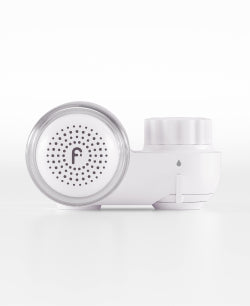
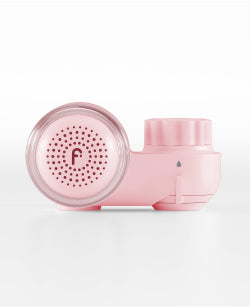
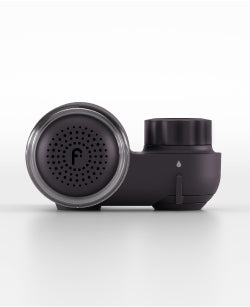
Filterbaby Faucet Filter Pro
White